What Actually Happens on Installation Day
Most people picture installation day as noise, dust and strangers in the house. In a home that has been planned properly, most of the hard decisions were made weeks earlier, and the day itself is quieter than expected.
Before anyone arrives
The work starts with a visit. A technician and a technical lead spend about 90 minutes in the home, looking at the cabling, the network and whatever is already installed. The price that follows is fixed and itemised, so by installation day you already know what is going in, where it goes and what it costs.
That visit is also where the awkward questions get answered. Which walls can be opened and which cannot. Where the equipment will live. What stays and what is replaced. None of that should be decided with a drill in someone’s hand.
The first hours: cables and the cabinet
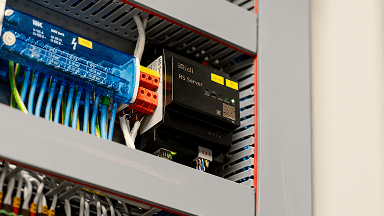
The least visible work comes first. Cables are run or checked, and the equipment that runs the home is fitted in one place, usually a cabinet or a cupboard close to the network. This is the part nobody photographs, and it decides how reliable everything else will be.
Most of our jobs are in homes people are already living in, so the work is planned around the household. Anything sound that is already in place is kept, and anything that needs replacing is explained before it is touched.
Devices second, the system third
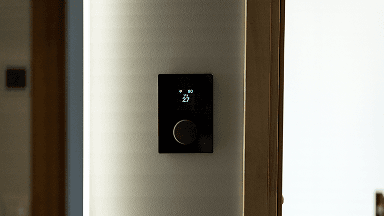
Only then do the visible parts go on the wall: cameras, locks, keypads, speakers and panels. Fitting a device takes minutes. Making it part of one system takes longer. Each one is added to the network, named for the room it is in, and tested from the app and from the wall.
Fitting a device takes minutes. Making it part of one system takes longer.
Handover
The last step is the easiest one to rush. Everyone who will use the system is shown how, including the people who did not ask for it. You are left with a record of what was installed, where it sits and how it is configured. That record is yours.
What to ask your installer
- Who will be in my home, and who is in charge on the day?
- What will be working by the evening, and what will not?
- Where will the equipment live, and can I see it?
- What record do I get at the end, and who owns it?
A good installation day is uneventful. If it feels dramatic, the planning was missing.