Wi-Fi Isn’t Enough: The Network Your Smart Home Really Runs On
When a smart home misbehaves, the device usually gets the blame. The camera freezes, the speaker drops out, the doorbell answers late. Very often the device is fine and the network under it is not.
One router was never meant for this
The router your internet provider supplies is built to get a few phones and laptops online. A connected home asks far more of it: cameras sending video all day, panels and speakers in every room, locks and sensors that must answer at once. One box in a cupboard near the front door cannot cover a villa on its own.
Villa walls are usually concrete or block, and Wi-Fi does not pass through them well. The signal that is strong in the hall can be unusable two rooms away, and outdoors by the gate, where the camera and the intercom are, it is often weakest of all.
What should be on a cable
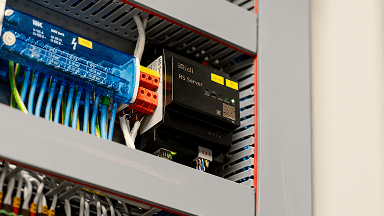
The rule is simple. Anything that does not move should be wired if it can be. Cameras, the intercom, the television, wall panels and the equipment in the cabinet all work better on a cable, and many can take their power over the same one.
Wi-Fi is then left for what really is wireless: phones, tablets and the few devices that cannot be reached by a cable. With less to carry, it does that job far better.
Coverage is designed, not boosted
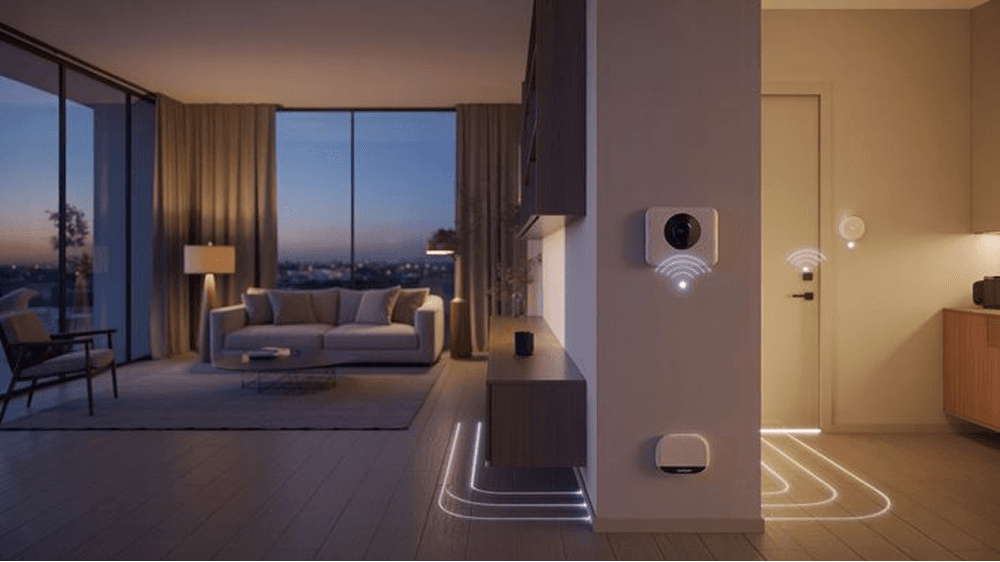
Plug-in boosters are the usual fix, and they mostly move the problem. Proper coverage comes from access points placed for the building, each wired back to the same network, so a phone moves between them without dropping.
If your installer has not asked where your router is and how the house is cabled, they have not planned the network.
Keeping devices apart
A well-set-up network also keeps things separate. Guests get internet access without seeing your cameras. The devices that run the house sit on their own part of the network, away from laptops and phones. If one thing is compromised, it cannot reach everything else.
Questions worth asking
- Which devices will be wired, and which will rely on Wi-Fi?
- Where will the access points go, and how were those places chosen?
- Are guests and household devices kept apart?
- Who looks after the network once the installation is finished?